- Handyman
- Installation & Setup
- Moving & Settling In
Picture & Wall Decor Hanging
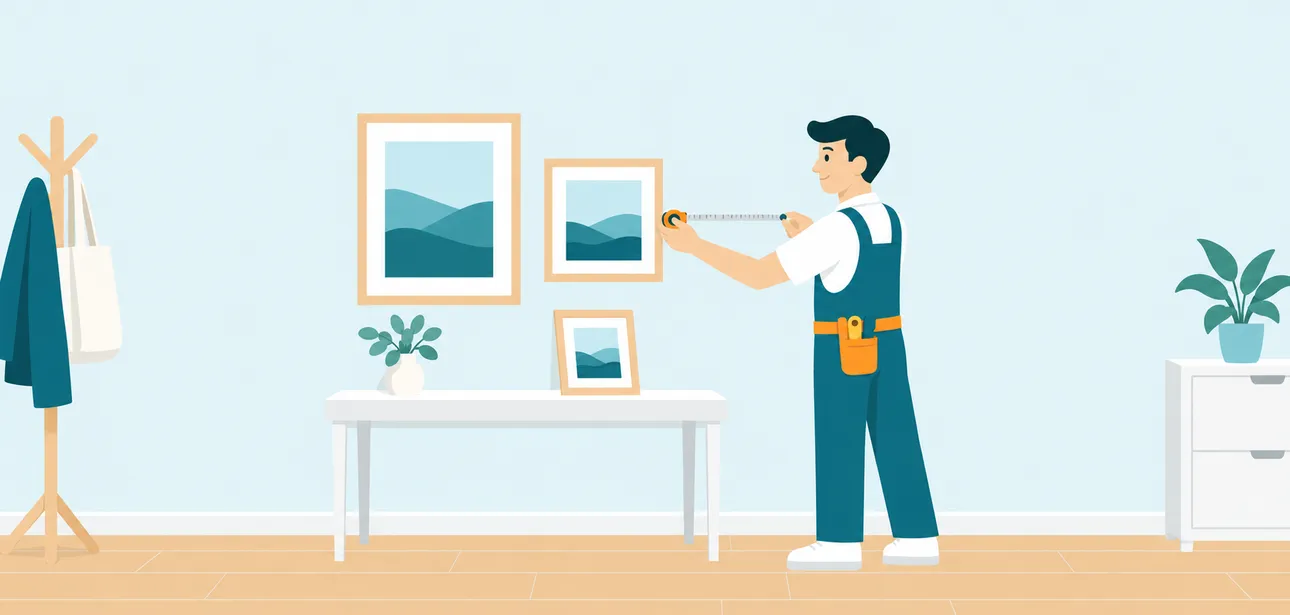
Want framed pictures, canvases, photos, posters, wall clocks or other decorative items hung securely on your wall? Your handyman chooses suitable hanging hardware based on each item's weight and size, the hanging points on the back of the frame and the wall material, then helps with positioning, drilling, hanging and levelling. They can also help plan a gallery wall, handle large or heavy items, rehang or move pieces, and install a wall-mounted picture hanging rail.
- Service area
- Vancouver, Burnaby and Richmond
Common issues
Decorating a new home with several pieces to hang
When you move into a new home or redecorate, several artworks and decorative items are hung in suitable spots in one visit, with consistent heights and levels.
Creating a gallery wall
You want several artworks of different sizes to form one gallery wall and need help planning the arrangement and spacing; drilling starts only after the layout is confirmed.
Large, heavy artwork and unsure whether the wall can hold it
Large framed or glass-framed pieces need to be fixed into a stud, or need heavy-duty hangers, two-point hanging or a French cleat instead, and may need two people to carry and hang them.
Concrete, brick or tile walls
Different walls need matching drill bits, tools and anchors; your handyman chooses the fixing method based on the actual wall.
Pictures keep tilting or adhesive hangers fall off
This may be related to single-point hanging, hangers loaded beyond their rated capacity, or a wall surface that isn't suitable for adhesives; your handyman will check and then recommend switching to two-point hanging or mechanical fixing.
Changing artwork often without drilling more holes
Once a wall-mounted picture hanging rail is installed, you can adjust the hanging cords and hooks along the rail, so changing pieces later no longer means drilling for each one.
Stairwells or high walls
Spots such as stairwells, high ceilings or above a fireplace need a suitable ladder, and some situations need two people.
What the pro will do
- 1
Your handyman finds out the type, number, size and approximate weight of the items, and collects photos of the front of each item, the hanging points on the back of the frame, the wall and the planned hanging spot. If you're in a rental unit or a strata property, please confirm the relevant rules first.
- 2
Your handyman inspects the items and the wall, checks for studs and for any detectable hidden wires or pipes, and recommends a hanging method based on weight and wall type; for a gallery wall, the layout is confirmed with you first. Work starts only after the scope and price are confirmed.
- 3
Your handyman measures and marks positions, drills or installs the hardware, hangs the items and levels them, adding anti-slip pads as needed. If they find on site that the wall needs to be opened to add backing, that electrical wiring needs to be handled, or that other work outside this service is needed, your handyman will stop and explain first; that work must be arranged separately.
- 4
When finished, your handyman checks that every item is secure and level, tidies the work area, and explains the hardware used and everyday care points.
Good to know
Share the weight and photos of the frame back in advance
Sharing the size, approximate weight (check the label or weigh it on a scale) and photos of the hanging points on the back of the frame helps your handyman prepare suitable hardware in advance.
Clear the area in front of the wall
Move furniture and fragile items away from the wall in advance, and place the items to be hung where they're easy to reach.
Point out nearby outlets and switches
If there are outlets, switches or plumbing fixtures near the planned hanging spot, please let your handyman know in advance; the location of wiring and pipes inside the wall needs special attention.
Check your tenancy agreement and strata rules first
If you rent, your landlord can set reasonable rules for hanging pictures; your strata may also have rules on drilling or work hours.
Avoid adhesive hangers for valuable items
Some adhesive hanger instructions state that they aren't suitable for antiques, heirlooms or valuables; mechanical fixing is better for high-value or irreplaceable items.
Avoid hanging heavy items above beds and seating
Framed or glass-framed artwork shouldn't be hung above the head of a bed, a sofa or seating.
Check hanging wire and frame hardware regularly
Worn or thinning hanging wire, or loose hardware on the back of a frame, can cause a picture to fall; replace or refasten it as soon as you notice.
Local tips
Hanging pictures with earthquakes in mind
BC is an earthquake risk area. BC's PreparedBC recommends moving framed pictures and mirrors away from beds, sofas and seating, and not hanging pictures or mirrors above where you sleep; Richmond Fire-Rescue also recommends keeping them away from exits and securing them properly to the wall.
Walls in older buildings
About half of homes in Metro Vancouver were built in 1990 or earlier. WorkSafeBC notes that wallboard and filler materials in homes built before 1990 may contain asbestos, and drilling may release fibres; if you know the year the building was built or have an asbestos test report, please tell your handyman in advance. A building's age alone doesn't mean its walls definitely contain asbestos.
Strata and rental units
Metro Vancouver has many strata properties and rental units. Strata bylaws may require written approval before changes to the structure or common property, and may also set work hours. In a rental unit, hanging pictures in line with your landlord's reasonable rules generally isn't considered damage, but tenants are responsible for repairing wall damage caused by too many or overly large holes, or by using screws or tape.
Work hours vary by city
Each city's noise bylaw sets different rules on work hours, and most cities restrict paid construction work on Sundays and statutory holidays; the days and times that can actually be booked depend on the city where the property is located and the strata rules.
This service covers only installing artwork and wall-hung decorative items on interior walls of homes, including gallery walls, large or heavy items, rehanging and moving pieces, adhesive hangers, wall-mounted picture hanging rails, and battery-powered or plug-in picture lights. It doesn't include mirrors, shelves, TVs, curtain tracks or other functional fixtures; hanging from the ceiling; hardwired picture lights or any electrical wiring; opening walls to add backing or structural work; patching old holes and painting; testing for or removing asbestos or lead paint; packing, transporting, restoring or framing artwork; or shopping or interior design consultation. Detection tools can only reduce the risk of hitting wires or pipes inside the wall; they can't guarantee these will be completely avoided. Hardware load ratings follow the manufacturer's instructions under specified conditions; the ageing of an item's own frame hardware or hanging wire, cracking or chipping of plaster or tile during drilling, and performance during an earthquake can't be guaranteed. The actual hanging method, date and time depend on your handyman's on-site assessment, property rules and the requirements of the city where the property is located.
Post this job in the app
Describe the job, add photos and get quotes from pros nearby. Posting is free for clients, and you don’t have to hire anyone.