- Handyman
- Home Repairs
- Routine Maintenance
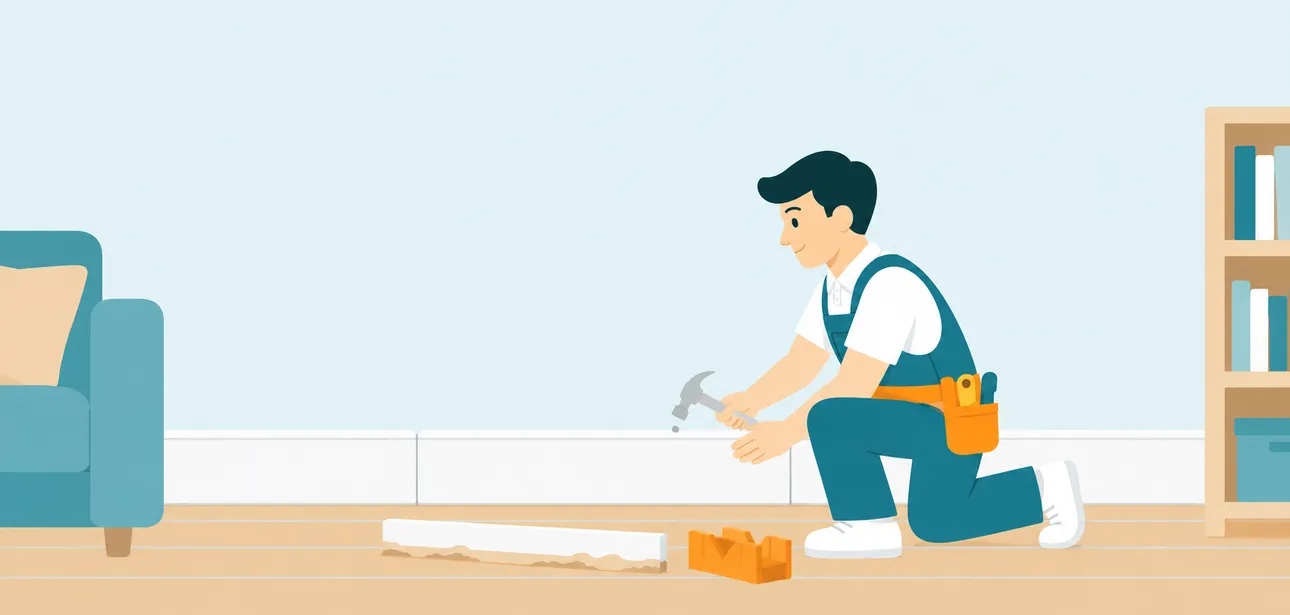
Floor Spot Repair & Baseboard
Got a board or two that's scratched, chipped or swollen and warped from water, a cracked floor tile, floors that squeak when you walk, flooring that's buckling up against the wall, a loose transition strip, or baseboards that are pulling away from the wall, cracked or need replacing? Based on your flooring product, how it was installed and the existing materials, your handyman can replace individual boards or tiles with matching material, repair surface damage, deal with localized squeaks and buckling, and re-secure, repair, replace or newly install baseboards, quarter round and shoe moulding.
- Service area
- Vancouver, Burnaby and Richmond
Common issues
A board or two is scratched, chipped or dented
Light scratches and small chips can usually be repaired with a repair kit or filler; deeper scratches, dents or burn marks may need the board replaced with a matching one.
Board edges are swollen or lifting
This may be linked to water getting in, changes in indoor humidity, or flooring installed too tight against the wall; your handyman will first find out whether the water source has been fixed and whether the floor is dry, then decide whether to cut the flooring back to restore the expansion gap or replace the damaged boards.
Floors squeak when you walk
The noise may come from between the boards, the subfloor or the joists; your handyman will assess a localized repair based on the type of flooring, the floor structure and whether it can be reached from below.
A floor tile is cracked or loose
If you have spare tiles or a matching tile can be found, individual tiles can be replaced and the grout redone; a hollow sound when tapped does not on its own necessarily mean a tile needs replacing.
A transition strip or stair nosing is loose
Loose or damaged doorway transition strips, reducers or stair nosing can be re-secured or replaced to suit the system.
Baseboards are pulling away, cracked or water-damaged
They can be re-secured, repaired, caulked and touched up with paint; a section that is badly water-damaged or warped can be replaced.
New baseboards or adding quarter round
Replace old baseboards, or add quarter round or shoe moulding along the bottom of the baseboard to cover the gap between it and the floor.
What the pro will do
- 1
Your handyman gets details on the address, property type, age of the home, where the damage is and how much there is, the flooring brand and product line or packaging label, how it was installed, whether there is leftover matching material, whether there is in-floor heating, the source of any water damage, and the baseboard length and whether painting is needed; please provide close-up and wide-angle photos of the damaged areas.
- 2
Inspects on site the flooring product, how it was installed, available matching materials, the cause of the damage and the surrounding conditions, confirms the repair method and whether materials testing or a strata enquiry needs to happen first, then confirms the scope of work and the cost.
- 3
Within the agreed scope, protects the surrounding floor and completes the board replacement, tile replacement, surface repair, squeak or buckling repair, transition strip fastening, or baseboard repair and replacement. If replacement materials need to acclimate to room temperature, or adhesive and grout need time to cure, a separate visit may need to be booked to finish.
- 4
Checks the repaired areas for flatness, seams, fastening and noise, cleans up the work area, and explains the curing time, when the floor can be walked on and care tips.
Good to know
Keep leftover materials and packaging
Replacing boards or tiles requires matching material; if you have boards, tiles, baseboards or the original paint left over from installation, along with the brand, product line and colour code on the packaging, please keep them and provide them. Newly ordered material may differ slightly in batch, colour and sheen from the floor already installed.
Deal with the water source first
When flooring has swollen or warped because of a leak, the leak should be fixed first and the flooring and subfloor allowed to dry out completely before booking the repair; for a strata unit, a leak should be reported to strata first.
Check warranty terms first
For flooring problems within the first 12 months after moving into a new home, or product defects still under the manufacturer's warranty, it is best to first notify the builder, warranty provider or retailer in writing; third-party repairs or alterations may affect the warranty for the parts concerned.
Strata units: check the bylaws first
Some strata bylaws restrict installing or replacing hard flooring, or set specifications for sound-control underlay. If yours has such a clause, it is best to ask strata in writing first, even if you are only replacing one or two boards with the same product.
Don't cut or scrape old flooring yourself
Old vinyl tile, sheet vinyl, linoleum and old adhesive may contain asbestos; before cutting, prying up, heating or scraping, a qualified person should first determine whether sampling and testing are needed.
Everyday care
Put soft pads on furniture legs, wipe up spills as soon as possible, and keep indoor humidity as the flooring manufacturer recommends; small scratches can be treated with the manufacturer's repair kit.
Local tips
Vinyl flooring and old adhesive in older homes
WorkSafeBC lists vinyl tile and linoleum sheet flooring as asbestos-containing materials commonly found in homes built before 1990; about half of homes in Metro Vancouver were built in 1990 or earlier. In homes built in 1990 or earlier, or where the year built is unknown, a qualified person must take samples for testing before old vinyl, linoleum or floor tile is replaced; for old adhesive under glue-down flooring, regardless of when it was laid, a qualified person must also determine whether testing is needed before it is scraped off.
Disposing of old flooring
Cities generally do not accept old flooring and baseboards in curbside collection or large-item pickup; they must be taken to a recycling depot, transfer station or landfill, where fees apply. Laminate, engineered wood, painted baseboards and MDF are usually not accepted as recyclable clean wood and are charged as garbage instead. Guidance from Vancouver and Port Coquitlam says untested old vinyl and linoleum must be treated as containing asbestos, and that it counts as commercial asbestos waste when transported by anyone other than the homeowner.
Strata bylaws vary
Local strata rules on flooring are worded differently, for example requiring written approval to install hard flooring, requiring sound-control underlay to meet a set specification, or restricting hard flooring on certain floors or in certain rooms. In one Civil Resolution Tribunal case, replacing old laminate with matching new laminate was ruled to be "installation" under the bylaw; there is no case yet on whether replacing just one or two boards is regulated in the same way.
Seasonal gaps
Wood flooring expands and contracts with indoor humidity; local flooring brands note that gaps appear more often in wood floors in winter, when heating makes indoor air drier, and this does not necessarily mean the floor is damaged.
Matching material may no longer be available
Flooring styles and batches can be discontinued or changed; you can check with a flooring retailer or the manufacturer whether the same product is still available. Unused leftover flooring and trim can be donated to used building materials stores that accept these items, such as Habitat ReStore in Burnaby and Langley.
This service only covers spot repairs to existing residential floors and baseboard work, including replacing individual boards, vinyl or tiles with matching material, surface repairs, localized squeaks and buckling, transition strips and stair nosing, and repairing, replacing and newly installing baseboards, quarter round and shoe moulding. It does not include re-laying whole sections or entire rooms, replacing underlay, full sanding and refinishing, subfloor, joist and stair structural work, leak and water damage restoration, asbestos testing and handling of asbestos-containing materials, in-floor heating, electrical and plumbing, carpet, waterproofing in wet areas, thresholds and doors, wall repairs, door and window casings and other trim, strata common areas, or non-residential properties. Board replacement, tile replacement and surface repairs depend on the matching materials actually available, and colour, grain and sheen can only be matched as closely as possible. Squeak repairs only address the localized causes that are found, and there is no guarantee the floor will never make noise again. Matching material availability, testing results, strata requirements, curing time and whether a separate visit is needed are subject to the actual address, materials, work steps and confirmation by your service provider.
Post this job in the app
Describe the job, add photos and get quotes from pros nearby. Posting is free for clients, and you don’t have to hire anyone.
Related services
- Cabinet Hinge & Drawer Slide Repair
- Caulking & Resealing (Tubs, Sinks, Windows)
- Door & Window Adjustment (Doors That Won't Close, Sticking Sliding Doors and Windows)
- Curtain Track & Blind Installation and Window Screen Repair
- Door Hinge, Handle and Lock Replacement
- Mirror Installation (Bathroom Mirrors, Full-Length Mirrors)