- Handyman
- Home Repairs
- Moving & Settling In
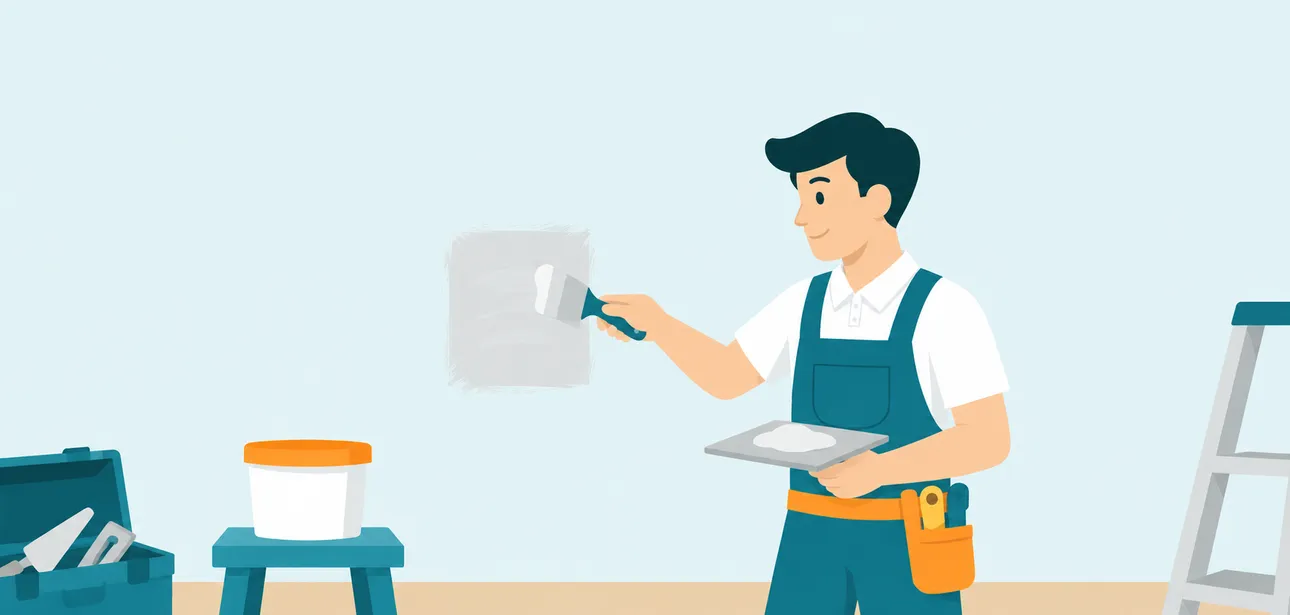
Wall Patching, Mudding and Touch-Up Painting
Nail holes left in the wall, a door handle that punched right through, screw holes everywhere after taking down a TV mount, or cracks and water stains on the ceiling? Your handyman repairs localized damage to interior drywall or plaster walls and ceilings, including small holes, holes that go through the board, openings that need a new piece of board patched in, cracks, nail pops, outside corner bead and torn paper facing. After applying compound, sanding and priming, the wall surface is smooth again, and if needed your handyman can match the texture and touch up the paint over the patched areas.
- Service area
- Vancouver, Burnaby and Richmond
Common issues
Filling nail holes before moving out of a rental
Taking down pictures, shelves or curtains has left a number of nail and screw holes that need to be filled flush and touched up with paint.
Door handle punched through the wall
A door handle has knocked a hole through the wallboard, which needs backing before compound is applied so the filler doesn't fall into the wall cavity.
Holes left after removing wall-mounted items
Taking down a TV mount, shelves or other wall-mounted items has left anchor holes, larger holes or peeled-up paper facing that need cleaning up and repairing.
Cracks in corners or on the ceiling
Cracks have appeared at joints, at the corners of doors and windows or on the ceiling, or there are nail pops, which need to be grooved out and taped before new compound is applied.
Dented outside corners
The corner bead on an outside corner has been dented or has rusted, or the compound over it has come off, and needs to be replaced with new corner bead.
Water stains after a leak has been fixed
The source of the leak has already been fixed and the wallboard is dry, leaving only yellow water stains or a locally damaged section of board that needs to be sealed with primer or cut out and replaced.
What the pro will do
- 1
Your handyman finds out the address, property type, year built, the type and number of damaged areas, the largest size, whether they are on walls or the ceiling, whether the wall surface has texture, and whether touch-up painting is needed and whether you have the original paint. Please provide close-up and wide photos, ideally with a coin or ruler beside the damage for scale. If there are water stains, also tell your handyman whether the leak has been fixed.
- 2
Your handyman confirms the wall material, the repair method and whether a return visit is needed. For homes built in or before 1990, or where the year built is unknown, most repairs require asbestos sampling and testing to be completed first by a qualified person. Work starts only after the scope of work and the price are confirmed.
- 3
Your handyman covers the floor, furniture and any nearby smoke alarms, then backs, applies compound, sands and primes as agreed, matching the texture and touching up the paint where needed. When materials need time to dry, the job may take two or more visits. If a leak, mould, a structural problem, asbestos-containing materials or other work outside this service is found during the job, your handyman will stop first and let you know, and that part will need to be arranged separately.
- 4
Your handyman removes the coverings, cleans up the work area and takes away the wall repair debris, checks the patched areas with you, and explains what to look out for until the paint has fully dried.
Good to know
Keep the original paint details
Keep the original paint can and note the brand, colour name or code, and sheen. If you don't have the original paint, you can provide the colour code, or follow the paint store's advice and bring a paint chip or sample for colour matching.
Send clear photos in advance
Close-up and wide photos taken in daylight or side lighting help your handyman judge the size, texture and repair method.
Deal with leaks and mould first
Before water stains are painted over, please confirm that the source of the leak has been fixed and the wallboard is dry. If the wall has gone soft, smells musty or shows black spots, deal with that separately first; paint cannot cover up or get rid of mould.
Avoid sanding yourself in older homes
In homes built in or before 1990, the joint compound and texture on walls may contain asbestos, and paint from before 1960 is also more likely to contain lead. Please don't sand, scrape or cut it yourself; arrange testing first.
Touch-up results
The colour and sheen of touch-up paint are affected by fading of the original paint, its sheen, how light or dark the colour is and the wall texture. Glossy or dark walls are harder to match evenly. If there are too many patched areas, repainting the whole wall may need to be arranged separately.
Clear the work area
Move furniture and fragile items away from the wall beforehand, and tell your handyman where nearby smoke or carbon monoxide (CO) alarms are.
Local tips
Asbestos testing in older homes
About half of homes in Metro Vancouver were built in or before 1990, ranging from about 37% to 72% depending on the city. For these homes, or homes where the year built is unknown, sampling and testing by a qualified person generally needs to be arranged before repairs; the report may take several days and is charged separately. The age of the home is only a guide, as walls renovated later may date from a different year.
Old drywall can't go in household garbage
Metro Vancouver's solid waste facilities list drywall as a banned material, and cities such as North Vancouver, West Vancouver and Port Coquitlam also clearly do not accept it in garbage carts. The region's used drywall recycling programs only accept material that residents remove and haul themselves, so old board cut out during wall repairs will be taken away by your handyman and disposed of according to the recycling facility's requirements.
Recycling leftover paint
Leftover paint, primer and stain-blocking primer can be recycled free of charge at Product Care collection sites, up to 10 cans per visit, in their original cans with labels kept. Leftover patching compound, brushes and rollers are not accepted. No paint collection sites are listed within Port Moody, West Vancouver or White Rock, so you'll need to go to a neighbouring city.
Filling holes in a rental unit
Under BC residential tenancy guidelines, nail holes left by a tenant hanging pictures in line with the landlord's reasonable rules do not count as damage; excessive or oversized holes, screw holes or damage caused by tape are the tenant's responsibility. Filling holes does not change the responsibilities between tenant and landlord, and cannot guarantee you'll pass the move-out inspection.
Water stains in strata units
For water stains caused by a leak from a unit above or from common facilities, responsibility for fixing the leak and for insurance claims depends on the strata's rules and the cause. Strata approval must be obtained before repairing common property such as the walls outside your unit or hallways.
Fire separation walls
In Vancouver, drywall repairs to fire separation walls in multi-unit residential buildings require a building permit. Requirements in other cities are confirmed based on the actual address and scope of work.
This service only covers localized repairs to interior drywall or plaster walls and ceilings in homes, including small holes, holes that go through the board, openings smaller than a full sheet of wallboard, cracks and nail pops, outside corner bead, torn paper facing, sealing water stains with primer, and texture matching and touch-up painting over the patched areas. It does not include replacing or newly installing one or more full sheets of wallboard; repainting a whole wall or a whole room; repairing or removing popcorn ceilings; asbestos or lead paint testing; handling asbestos-containing materials; leak repair and mould remediation; structural repairs; plaster restoration such as large areas of plaster coming away, sagging ceilings or reattaching lath (plaster can only be repaired if it is still firmly attached); removing or installing wall-mounted items such as TV mounts and shelves, or hardware such as door stops; opening walls to add blocking; electrical wiring and plumbing work inside walls; caulking; or exterior work. If you need any of this work, it will need to be arranged separately. For homes built in or before 1990, or where the year built is unknown, repairs other than sealing water stains with primer and touch-up painting that doesn't involve sanding the existing paint will only go ahead after asbestos testing confirms there is no asbestos. Touch-up painting can only come as close as possible to the original colour and sheen, and the patched areas may not be completely invisible. If cracks are caused by structural movement or moisture, they may come back after repair, and water stains may also reappear if the leak has not been fully resolved. Permits, strata approval or landlord approval are confirmed based on the actual address and scope of work.
Post this job in the app
Describe the job, add photos and get quotes from pros nearby. Posting is free for clients, and you don’t have to hire anyone.